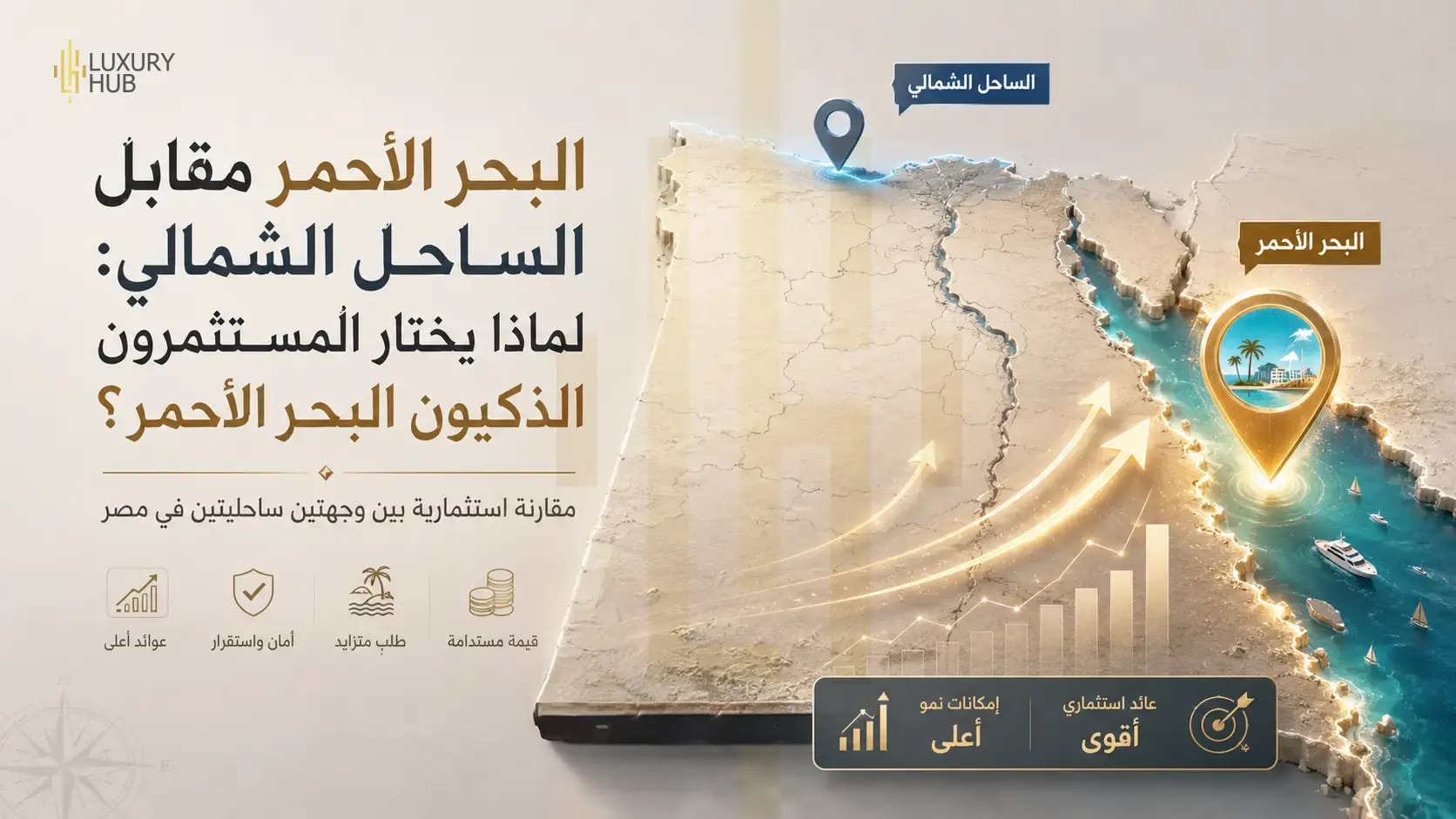
Egypt's coastal real estate market offers two compelling stories: the North Coast and the Red Sea. Both attract serious capital. But when you look at the fundamentals — year-round tourism, rental income, foreign demand, and operational infrastructure — the Red Sea emerges as the stronger investment model. Here's an honest, data-driven look at why.
Two Different Investment Models
Before comparing numbers, it's important to understand that these two markets aren't really competing for the same buyer. They operate on fundamentally different logic.
The North Coast is built on capital appreciation: a domestic Egyptian market driven by social status, seasonal use, and the long-term story of Ras El Hekma. The Red Sea is built on operational performance: year-round tourism, international demand, rental income, and a fully functioning hospitality ecosystem that works in every month of the year.
One is a bet on future value. The other is a machine that generates income today.
The Red Sea Advantage: 12 Months, Not 3
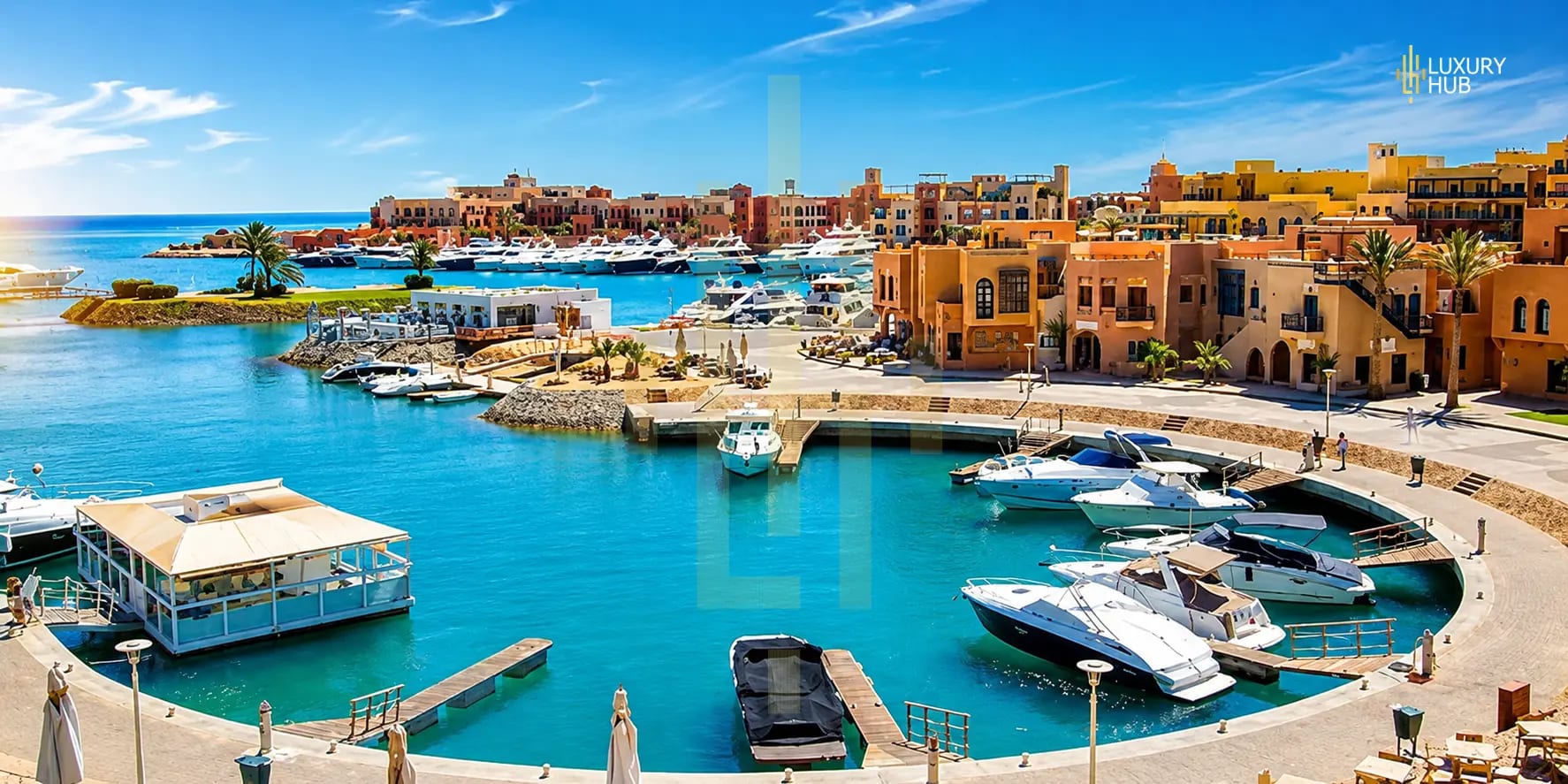
The single most important difference between the two markets is seasonality. The North Coast is, in large part, a summer market. Demand peaks sharply in July and August, then drops dramatically for the remaining ten months of the year. Rental returns are heavily compressed into a narrow window.
The Red Sea operates year-round. Hurghada and Makadi Bay attract European tourists escaping cold winters, divers from around the world, and Egyptian families throughout the year. International arrivals don't stop in September. This sustained demand creates rental income potential that the North Coast simply cannot match across an annual cycle.
Egypt's government has set an official target of 30 million tourists annually by 2030, up from approximately 19 million in 2025. The Red Sea — with its airports, existing hotel infrastructure, and international brand recognition — is the primary driver of that growth.
Foreign Demand: A Market the North Coast Doesn't Access
The North Coast is almost entirely a domestic Egyptian market. The buyers are Egyptian, the renters are Egyptian, and the social value is Egyptian. This creates deep liquidity within that segment but limits the total addressable market.
The Red Sea taps into a fundamentally different pool of capital. European buyers, GCC investors, and international tourists looking for short-term rentals all participate in Red Sea property. This diversification reduces dependence on any single economic or currency cycle and opens the door to foreign-currency income — a significant advantage in the Egyptian market.
Infrastructure Is Already There
One of the most underappreciated advantages of the Red Sea is that the infrastructure exists today. Hurghada International Airport serves direct flights from across Europe year-round. Hotels, marinas, dive centers, golf courses, and medical facilities are operational. When you buy into a Red Sea project, you're buying into a functioning destination — not a promise of one.
Compare this to many North Coast developments, where the surrounding area is still years from having the schools, hospitals, airports, and commercial activity that make a location truly livable and rentable beyond the summer weeks.
Makadi Heights: The Red Sea at Its Best
To understand what serious Red Sea investment looks like in practice, Makadi Heights by Orascom is the clearest example on the market today.
Situated in Makadi Bay — 78 meters above sea level, 1,150 feddans, 15 minutes from Hurghada airport — the project answers every question a serious investor should ask before committing capital:
- Developer track record: Orascom built El Gouna, one of Egypt's most successful integrated resort communities. Their portfolio spans 24 hotels, 4,918 rooms, and international projects in Montenegro, Switzerland, and the UK. This is not a speculative developer.
- Operational ecosystem: 35 swimming pools, a 6,000 m² lake, 33,000 m² clubhouse, private beach access, a full mall, schools, and a hospital. The amenities are real, not planned.
- Rental potential: 15 minutes from Hurghada airport means guests land and arrive quickly. Year-round flights mean year-round occupancy potential.
- Pricing structure: Chalets from 15,890,000 EGP (68 m²), twin houses from 23,735,000 EGP (144 m²). All units are fully finished with kitchen cabinets — no hidden fit-out costs.
- Payment terms: 10% down payment, 7-year installment plan, delivery in 3.5 years. The entry barrier is structured for real investors, not just cash buyers.
- Green and low density: Over 85% green space, designed for the kind of resort-quality environment that holds its value and attracts the international market.
This is the Red Sea investment model working at full capacity: a proven developer, completed infrastructure, international airport proximity, year-round tourism, and a payment plan that lets investors manage cash flow while the asset appreciates.
The North Coast Case — Honest Assessment
The North Coast isn't a bad investment — but it is a different one. The Ras El Hekma story, anchored by ADQ's $35 billion commitment and Modon as the master developer, has elevated the entire region's long-term profile. For an Egyptian investor willing to hold for 5+ years without needing rental income, a well-positioned North Coast unit in a premium project near the coast or lagoon may appreciate meaningfully.
However, the risks are real. High entry prices compress future upside. Continuous new supply from the same developers competes with resale units. And the seasonal nature of the market means that unless you're willing to manage short-season rentals aggressively, the asset will sit idle for most of the year.
The North Coast works best as a capital preservation and appreciation play, not as an income-generating asset. The distinction matters enormously when planning investment horizon and return expectations.
Direct Investment Comparison
| Factor | Red Sea (Makadi Bay) | North Coast |
|---|---|---|
| Season length | Year-round | Primarily June–August |
| Rental demand | Local + international tourists | Predominantly domestic |
| Airport access | 15 min (Hurghada Int'l) | 2–3 hrs (Cairo drive) |
| Infrastructure today | Hotels, marinas, services operational | Largely under development |
| Foreign buyer market | Strong — European, GCC | Limited — mainly Egyptian |
| Primary return type | Rental income + capital gain | Capital appreciation |
| Investment horizon | Medium term (3–5 years) | Long term (5–10 years) |
The Golden Rule for Each Market
In the North Coast: buy scarcity. A beachfront or lagoon-facing unit inside a major project, at a rational entry price, can deliver strong capital appreciation — but only with patience. Avoid mid-market units in oversupplied zones expecting quick flips.
In the Red Sea: buy operations. Proximity to the airport, an active hotel ecosystem, real amenities, and a credible management structure are what generate returns. A unit in a well-managed Red Sea project like Makadi Heights consistently outperforms a larger unit in a poorly operated or isolated location.
Final Verdict
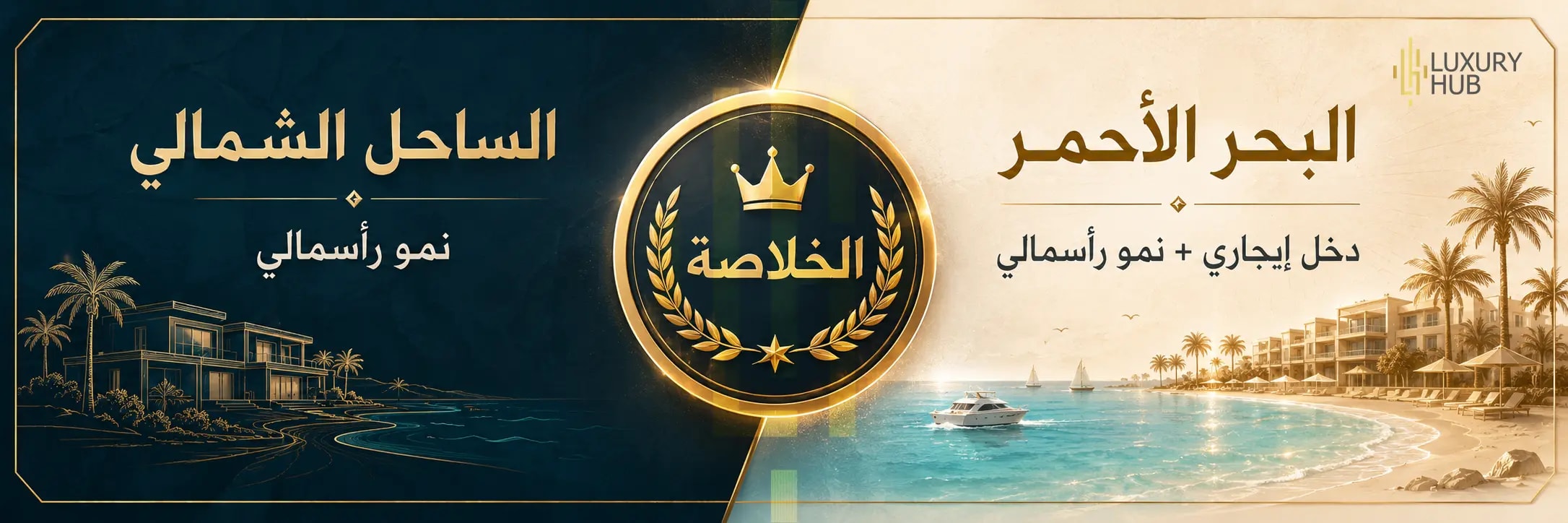
Both markets have a role in a sophisticated Egyptian property portfolio. But if forced to choose one — for diversification, income potential, international exposure, and the ability to enter today at a price that still makes sense — the Red Sea is the stronger investment.
Year-round demand, a functioning airport, an international tourist base, and projects like Makadi Heights backed by Orascom's decades of execution combine to make the Red Sea not just Egypt's most beautiful coastline, but its most complete investment destination.
